It's no surprise that AI has become standard operating procedure across industries. But the real question isn't whether companies are using AI—it’s which tasks are companies using AI for? And are they seeing good returns? How are organizations planning to make more use of AI in the future?
I analyzed the earning reports and press releases of several public companies across sectors—tech, retail, entertainment, ecommerce, food, apparel, and more—how organizations are deploying frontier AI models and LLMs. Here’s what I found.
{toc}
AI agents are the #1 source of cost and time savings
Most public companies aren’t just using AI assistants or copilots, they are deploying autonomous AI agents in specific, high-volume workflows. In internal operations, AI agents are mostly used to complete tedious tasks faster and share information across the org.
- IBM: IBM has saved $4.5B ( 🤯) from 2023 to 2025 thanks to AI and automation. That equals approximately 40,000-50,000 full-time employees in cost savings (assuming $90-110K loaded cost per employee) and 7% of the org’s 2024 revenue ($62.8B). Bloomberg also reported that the company has saved 3.9M hours of time in 2024 with AI initiatives.
The company treats itself as its “Client Zero” to transform its capabilities using AI—so it can help clients achieve the same results. The primary drivers of this immense time and cost savings are internal AI agents like AskHR that answer 94% employee queries, allowing for a 40% operating budget reduction.
IBM has also used Apptio to find the total cost of their IT operations and practice smart tradeoffs. The result: $600 million in enterprise IT cost savings since 2022.
One last great example is AskIT. IBM employed 400 professionals dedicated to supporting Americas IT—which used to cost $400M a year. The company built AskIT to handle 80% of inquiries in multiple languages, saving $18M in support costs. - Amazon: Amazon has introduced Seller Assistant for its merchant partners that helps keep track of inventory, flag slow-moving products, and predict future demand. It takes its data from 25 years of info Amazon has purchasing behavior. This agent is powered by Amazon Bedrock and leverages Amazon Nova and Claude. The company has also launched Creative Studio to help merchants create ads using natural language prompts.
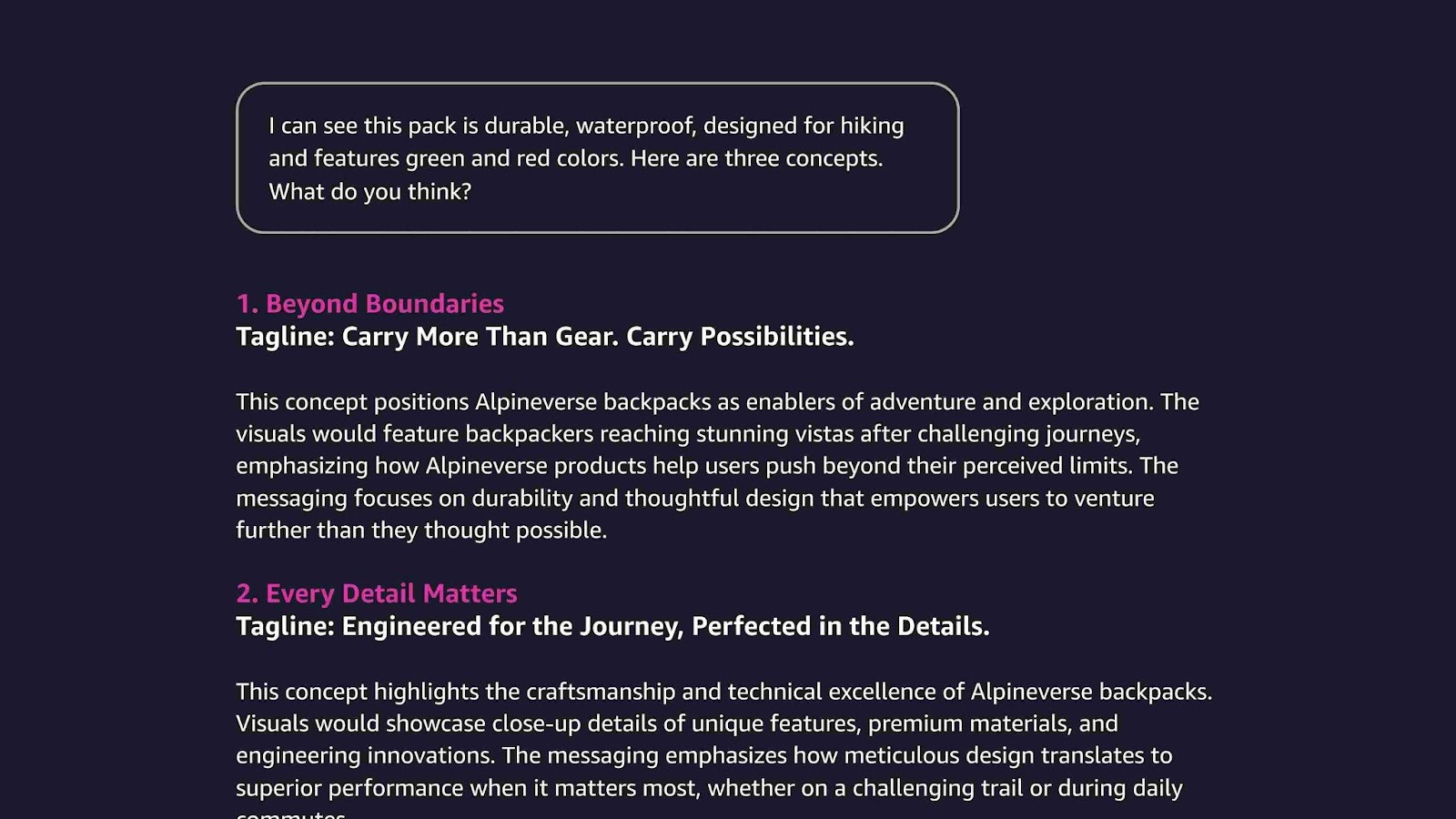
Over 1.3 million sellers on Amazon rely on the company’s genAI tools to write product listings, generate images, and optimize ads—potentially saving 60 hours per week.
In its earnings report, the company also highlighted adoption of an agentic AI app that acts as a teammate—employees can use it to interact with agents and find insights, practice research, and take actions across systems. According to the report, it translates to 80%+ time savings on complex tasks and 90%+ cost savings.
- Walmart: Walmart is going “all in on agents”—bringing them in almost every step of the company’s workflows. Associate agent helps employees see everything (like schedules, sales data) in one place and AI agent Marty helps suppliers, sellers, and advertisers manage orders, campaigns, and onboarding. 900,000 associates ask three million questions per week to the Associate AI agent. 40% of the company’s code is also AI written or AI assisted, according to their earnings report.
- Netflix: Netflix also built an AI-powered retrieval system to help Netflix employees get answers from complex data—faster and more accurately. Now, employees can ask questions in plain English and make better decisions. The AI model understands search intent and makes data easier to find, reducing dependencies on specialized engineers and saving loads of hours.
- KLM Airlines: The transport industry is using AI agents for customer support. KLM airlines is mentioned 130,000 times on social media every week—requiring 250 social media service agents engaging in at least 30,000 conversations/week. AI agent (provided by DigitalGenius) now handles 50% of these customer inquiries.
Takeaway: ‘Tis is the season of AI agents. Large public companies are increasingly adopting AI agents in their systems rather than stitching together various AI tools because agents can autonomously complete entire workflows from start to finish after a single instruction, while tools require constant human guidance for each step.
AI-powered personalization for customers is on the rise
Okay, so we’ve covered how companies are using AI agents to make their internal operations more efficient. But how are orgs using AI to provide a better customer experience? The most common use case here is personalization—at scale.
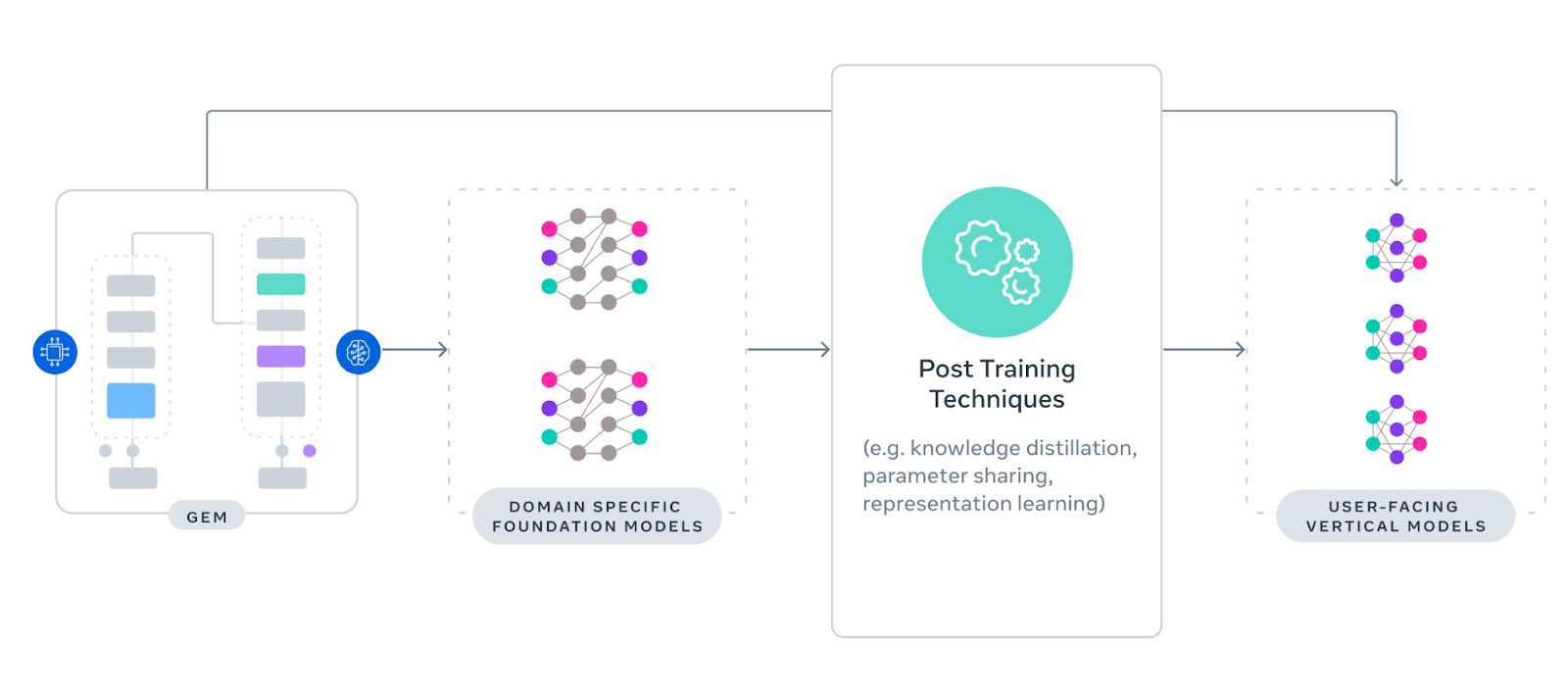
- Meta: Meta is increasingly using genAI-powered ad ranking systems—specifically the Lattice and GEM model—to predict which ads will convert better, then automatically optimizing delivery in real-time. According to the company, GEM has led to 4% lift in ad conversions on Facebook Feed and Reels and a 5% lift on Instagram.
More than four million advertisers use one of Meta’s Gen AI tools to improve ad performance. Advantage+ shopping campaigns specifically saw 70% YoY growth in Q4 2025. Meta’s personal AI assistant also has 700 million monthly active users—with predictions of reaching one billion in 2026.
- Netflix: In its 2025 Q3 earning report, Netflix revealed its using gen AI to improve content recommendations and improve discovery.
“One example is our beta testing of a conversational search experience that allows members to use natural language to explore the catalog and discover the perfect title for that moment. Another is the way we’re using GenAI to localize promotional assets in a variety of languages so titles can more easily travel to audiences who will love them around the globe.”
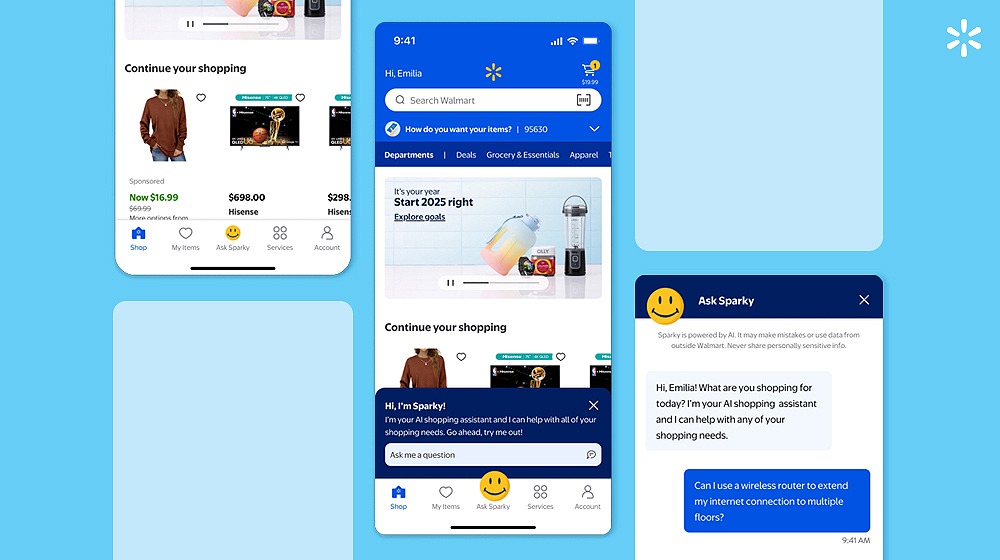
Netflix is also using AI-powered search to help mobile users hunt for content in natural language like “I want to watch something funny and lighthearted.” The company is also looking to use AI to optimize ads on its ad-supported plans, just like Meta—including generating creative, finding best ad placements, and more. - Walmart: Walmart’s all-in on agents philosophy isn’t limited to internal ops. The company is using an AI agent called Sparky that acts as a customer’s shopping assistant. It can help analyze reviews, offer occasion-based shopping recommendations, reorder frequently purchased options, and a lot more.
- Delta Airlines: Transport companies like Delta Airlines also use AI agents to deliver a better customer experience. Delta Concierge, for example, is an AI-powered assistant that delivers real-time support. Customers are notified of passport expiry dates, visa requirements, and bag tracking. The company also has partnerships with Uber and YouTube on the horizon to make AI assistance even more powerful.
- Amazon: According to its Q3 2025 earning reports, Amazon has embedded various AI features to improve customer experience. Help Me Decide is an AI assistant for customers to choose between various similar products based on their preferences and browsing activity. There’s also the infamous AI-powered assistant, Rufus. 250 million customers used it in 2025—shoppers using it are 60% more likely to complete a purchase.
- Alphabet: Google is perhaps the best at seamlessly stitching AI into its tools without “feeling” like AI. Alphabet’s Q3 2025 earnings report says Google’s AI overviews have surpassed two billion monthly users across 200+ countries and the Gemini app has over 450 million monthly active users. And in June of 2025 alone, over 50 million people used AI-powered meeting notes in Google Meet.
Google is also betting on agentic AI agents that can help users shop better, handle bookings, and provide an option for retailers to provide exclusive discounts in AI mode.
Takeaway: Most public companies are using AI tools to deliver personalized experiences at scale. It helps (a ton!) that these orgs have large amounts of data on their customers to analyze their buying/watching/browsing behavior. Doing this might be difficult for smaller companies, but it’s definitely not impossible. Start by thinking where you can remove friction for your customers by introducing AI assistance. The easiest place to begin might be an AI chatbot that’s trained on your company documents to offer personalized support quickly.
Custom AI chips are the real competitive moat
Tech giants like Alphabet, Meta, Amazon, etc. are investing in custom AI chips. The reason is two-fold:
a) shortage of NVIDIA GPUs
b) custom AI chips are cheaper over the long term because they can be specialized for specific AI tasks
And custom AI chips are proving to be a wise investment for conglomerates. The multinational orgs either sell these AI chips or use them internally for massive cost savings.
- Alphabet: Google is providing access to its TPUs as a service through its cloud—which is becoming very profitable for the company. In its Q3 2025 earnings report, the company shared that its cloud revenue jumped by 34% from a year earlier to $15.15 billion (more than what analysts had predicted).
“We are seeing substantial demand for our AI infrastructure products, including TPU-based and GPU-based solutions,” says CEO Sundar Pichai. “It is one of the key drivers of our growth over the past year, and I think on a going-forward basis, I think we continue to see very strong demand, and we are investing to meet that.” - Amazon: AWS Trainium2 delivers 4x the performance of first-generation Trainium and offers 30-40% better price-performance than GPU-based EC2 instances. In its Q3 2025 earnings report, the company said Trainium2 saw 150% growth.
“We continue to see strong momentum and growth across Amazon as AI drives meaningful improvements in every corner of our business,” said Andy Jassy, President and CEO, Amazon. “AWS is growing at a pace we haven’t seen since 2022, re-accelerating to 20.2% YoY.” - Microsoft: Microsoft’s own Maia chips help the company reduce costs significantly. Maia 100 isn’t available for clients to rent. Instead, they’re deployed internally to run Microsoft's own AI services more cost-effectively. That said, Microsoft has reported that Azure (Maia chip is part of the infrastructure powering Azure's AI services) surpassed $75 billion in annual revenue in 2025.
“Cloud and AI is the driving force of business transformation across every industry and sector," said Satya Nadella, chairman and chief executive officer of Microsoft. “We’re innovating across the tech stack to help customers adapt and grow in this new era.” - Meta: Like Microsoft, Meta is making its own custom chips, called MTIA, to improve efficiency internally. Meta uses these computer chips to run the AI that decides what posts, ads, and videos you see on Facebook and Instagram. The new version (v2) is about 3x faster than their first attempt and uses less electricity per task.
“MTIA has been deployed in the data center and is now serving models in production. We are already seeing the positive results of this program as it's allowing us to dedicate and invest in more compute power for our more intensive AI workloads.”
Takeaway: For large organizations, it makes a lot of business sense to invest in custom AI chips—whether that’s for cost-cutting internally or selling to other companies.
Most organizations aren’t seeing measurable results from GenAI (and what to do about it)
The patterns above indicate that AI is helping businesses grow more rapidly than ever before. But the ground reality is a bit different—especially for small to mid sized companies.
- A survey by Workday revealed that while AI is delivering productivity gains, 37% of the time saved is being offset by rework
- According to a report by MIT, 95% of organizations are getting zero ROI out of genAI
This productivity paradox isn’t unheard of. Sure, large companies like Meta, Alphabet, Amazon, IBM are more likely to succeed because of the resources they have at their disposal. But there are certain ways you can swoop in the 5% companies that get positive ROI from genAI.
- Deploy genAI in specific, measurable workflows with external partners: Most task-specific genAI tools are investigated, piloted, but rarely successfully implemented.
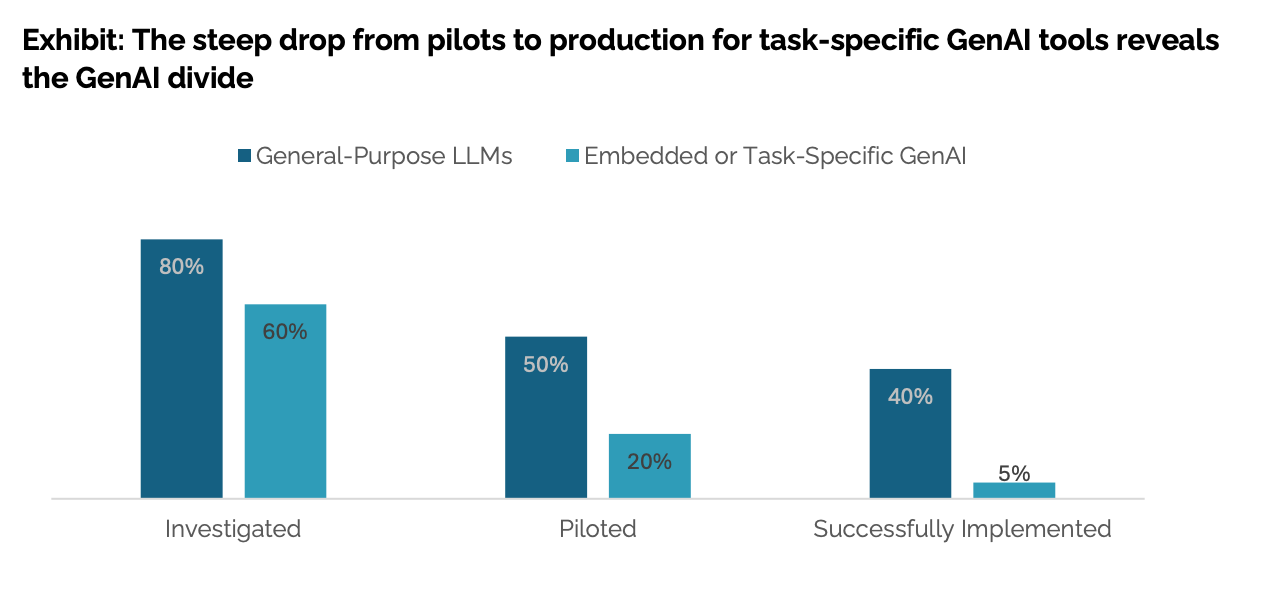
Part of the failure is in competing priorities: businesses need to continue running their core business while also investing in AI for the future. According to MIT’s report, external partnerships succeed 2x more often than internal builds (67% vs 33%) and trying to build your AI stack in-house is twice as likely to fail.
So rely on external partners for greater adoption and ensuring your AI initiatives don’t remain stuck in the pilot mode.
- Target back office functions: The MIT report shows 70% of AI funding goes to sales and marketing, despite back office functions (think legal, finance, ops) yielding a better ROI. While sales and marketing are more “visible” functions of an org to track AI impact, take a step back and also find ways to embed genAI into back office functions.
- Build AI agents: As we already covered, AI agents are on the rise for good reason. Agents allow for solving the top barriers to integrating AI into workflows.
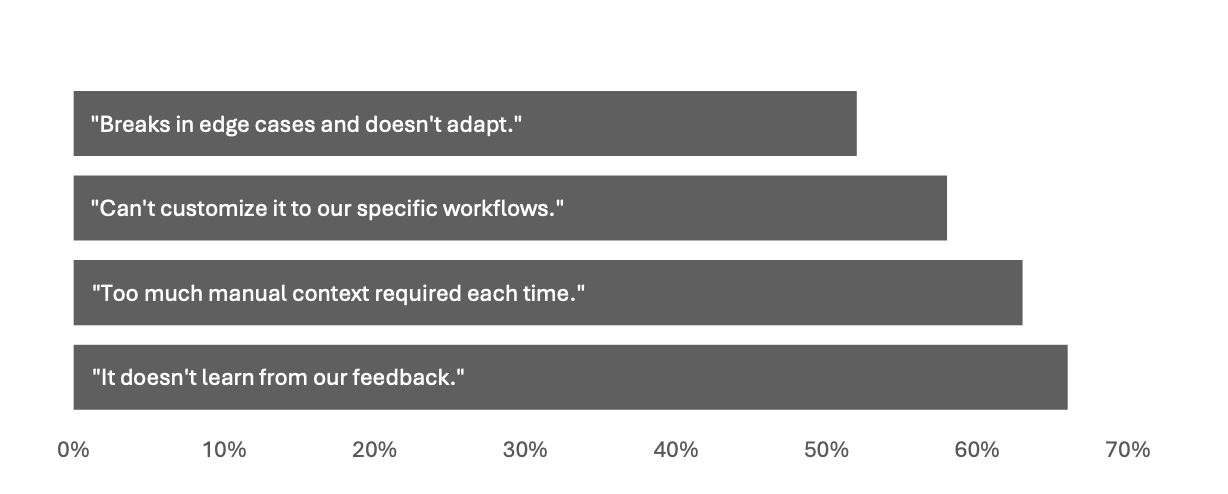
The primary drawback of static tools is they get abandoned because training them is a hassle for employees every time. Choose tools/agents with learning-capable systems.
The organizations that succeed with AI do a few things right: they choose systems that integrate into their existing workflows, focus on tasks across the org that could benefit from AI, and treat AI as a partnership requiring ongoing customization.
AI is reshaping businesses (and will continue to do so)
The data is pretty clear. Companies across every sector are using AI, they're seeing results, and they're doubling down with bigger investments. This isn't a trend that's fading anytime soon.
Whether you're excited about it or not, AI is becoming non-negotiable. The organizations figuring it out now will have a serious advantage. The best time to start using AI was 2023. The second best time is right now.